
Literature Database Entry
wu2026scalable
Mengfan Wu, "Scalable Federated Learning in Heterogeneous Networks: Strategies for Asynchronous, Hierarchical, and Decentralized Systems," PhD Thesis, School of Electrical Engineering and Computer Science (EECS), TU Berlin (TUB), September 2026. (Advisor: Falko Dressler; Referees: Falko Dressler, Osvaldo Simeone and Luca Sanguinetti)
Abstract
As the Internet of Things (IoT) grows in importance, traditional centralized paradigm for training artificial intelligence is increasingly strained by the sheer volume of data generated at the edge, the limited bandwidth available for its transmission, and the storage and computational demands placed on servers. Federated Learning (FL) has emerged as a transformative solution, enabling collaborative model training directly on edge devices without exchanging raw data, thereby exploiting distributed computational resources while alleviating pressure on centralized infrastructure. However, the practical deployment of FL in edge environments is hindered by system heterogeneity across three primary dimensions: communication links of variable bandwidth and reliability, heterogeneous computational capabilities, and non-IID (non-independent-and-identically distributed) data distributions across devices. Conventional synchronous, server-centric architectures often struggle under these conditions, as slower devices introduce straggler effects, while data heterogeneity destabilizes global model optimization. This dissertation proposes a progression of frameworks to enable robust federated learning in highly heterogeneous networks, structured around three fundamental questions of coordination and a gradual reduction in centralization: from centralized asynchrony to hierarchical clustering and ultimately fully decentralized peer-to-peer learning. First, we address the temporal question of when devices should communicate. We introduce a link-aware, asynchronous strategy that enables devices to opportunistically schedule their training and communication based on observed link quality. Combined with an aggregation weighting scheme that accounts for model divergence and local optimization effort, this strategy improves computation resource utilization and maintains convergence stability despite irregular participation. Second, we address the structural question of where communication should occur within the network topology. We develop a co-optimization clustering framework for hierarchical FL in Device-to-Device (D2D) networks, jointly considering resource efficiency and alignment of learning objectives across clusters. By treating the communication topology as an optimizable design variable rather than a fixed constraint, the framework enhances scalability while maintaining stability under data heterogeneity. Third, we address the functional question of what model components should be shared in fully decentralized asynchronous settings. We identify the coupling between shared feature-extraction backbones and distribution-sensitive classifier heads as a key source of instability. By restricting peer-to-peer exchange to backbone parameters while keeping classifier heads local, the proposed structural decoupling strategy stabilizes asynchronous decentralized learning and improves personalization while largely preserving representation quality. Collectively, by addressing the questions of when, where, and what to communicate, this dissertation advances FL from a rigid idealized paradigm towards robust and scalable systems capable of operating across the diverse and dynamic conditions characterizing real-world IoT deployments.
Quick access

Contact
BibTeX reference
@phdthesis{wu2026scalable,

     author = {Wu, Mengfan},

     title = {{Scalable Federated Learning in Heterogeneous Networks: Strategies for Asynchronous, Hierarchical, and Decentralized Systems}},

     advisor = {Dressler, Falko},

     institution = {School of Electrical Engineering and Computer Science (EECS)},

     location = {Berlin, Germany},

     month = {9},

     referee = {Dressler, Falko and Simeone, Osvaldo and Sanguinetti, Luca},

     school = {TU Berlin (TUB)},

     type = {PhD Thesis},

     year = {2026},

   }
Copyright notice
Links to final or draft versions of papers are presented here to ensure timely dissemination of scholarly and technical work. Copyright and all rights therein are retained by authors or by other copyright holders. All persons copying this information are expected to adhere to the terms and constraints invoked by each author's copyright. In most cases, these works may not be reposted or distributed for commercial purposes without the explicit permission of the copyright holder.
The following applies to all papers listed above that have IEEE copyrights: Personal use of this material is permitted. However, permission to reprint/republish this material for advertising or promotional purposes or for creating new collective works for resale or redistribution to servers or lists, or to reuse any copyrighted component of this work in other works must be obtained from the IEEE.
The following applies to all papers listed above that are in submission to IEEE conference/workshop proceedings or journals: This work has been submitted to the IEEE for possible publication. Copyright may be transferred without notice, after which this version may no longer be accessible.
The following applies to all papers listed above that have ACM copyrights: ACM COPYRIGHT NOTICE. Permission to make digital or hard copies of part or all of this work for personal or classroom use is granted without fee provided that copies are not made or distributed for profit or commercial advantage and that copies bear this notice and the full citation on the first page. Copyrights for components of this work owned by others than ACM must be honored. Abstracting with credit is permitted. To copy otherwise, to republish, to post on servers, or to redistribute to lists, requires prior specific permission and/or a fee. Request permissions from Publications Dept., ACM, Inc., fax +1 (212) 869-0481, or permissions@acm.org.
The following applies to all SpringerLink papers listed above that have Springer Science+Business Media copyrights: The original publication is available at www.springerlink.com.
This page was automatically generated using BibDB and bib2web.
Featured Paper
- One-Shot Federated Model Editing for Device Dynamics at the Edge
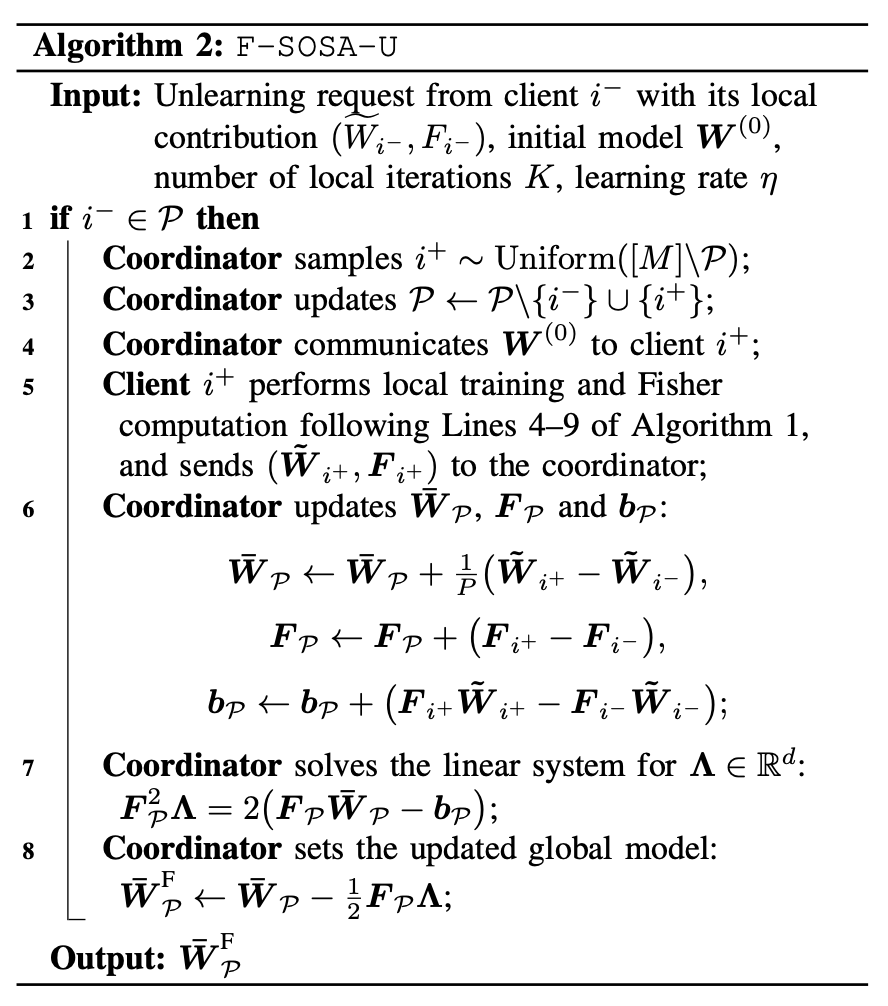
Standard federated learning (FL) requires persistent device connectivity across multiple communication rounds, making it unsuitable for dynamic environments such as ve...
News
- October 08, 2026
New IEEE Transactions on Mobile Computing article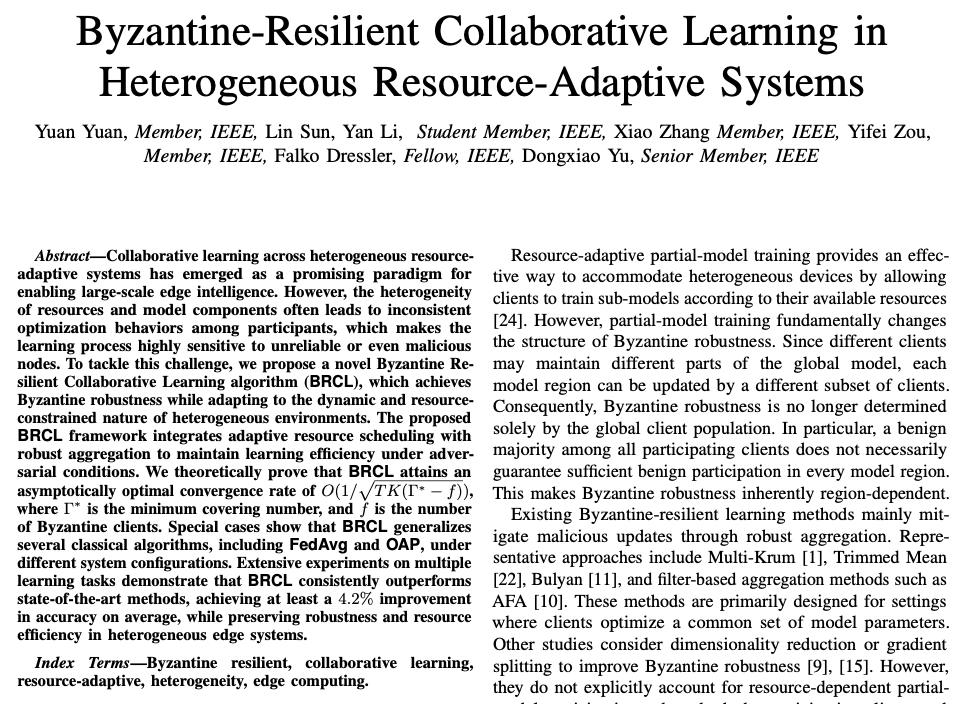
Our article Byzantine-Resilient Collaborative Learning in... - October 02, 2026
KuVS Research School on Network and System Resilience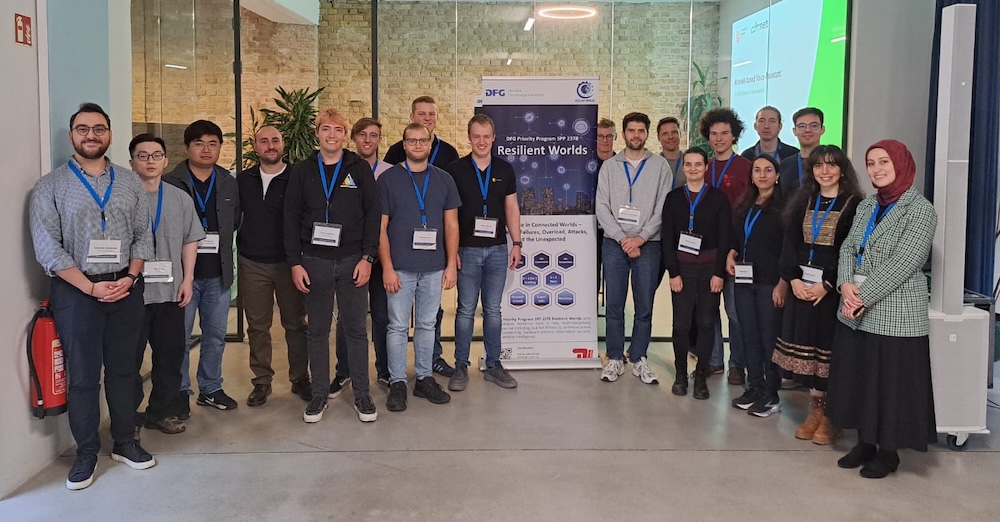
Our group member Dr. Doganalp Ergenc organized the KuVS R... - September 26, 2026
New IEEE Transactions on Mobile Computing article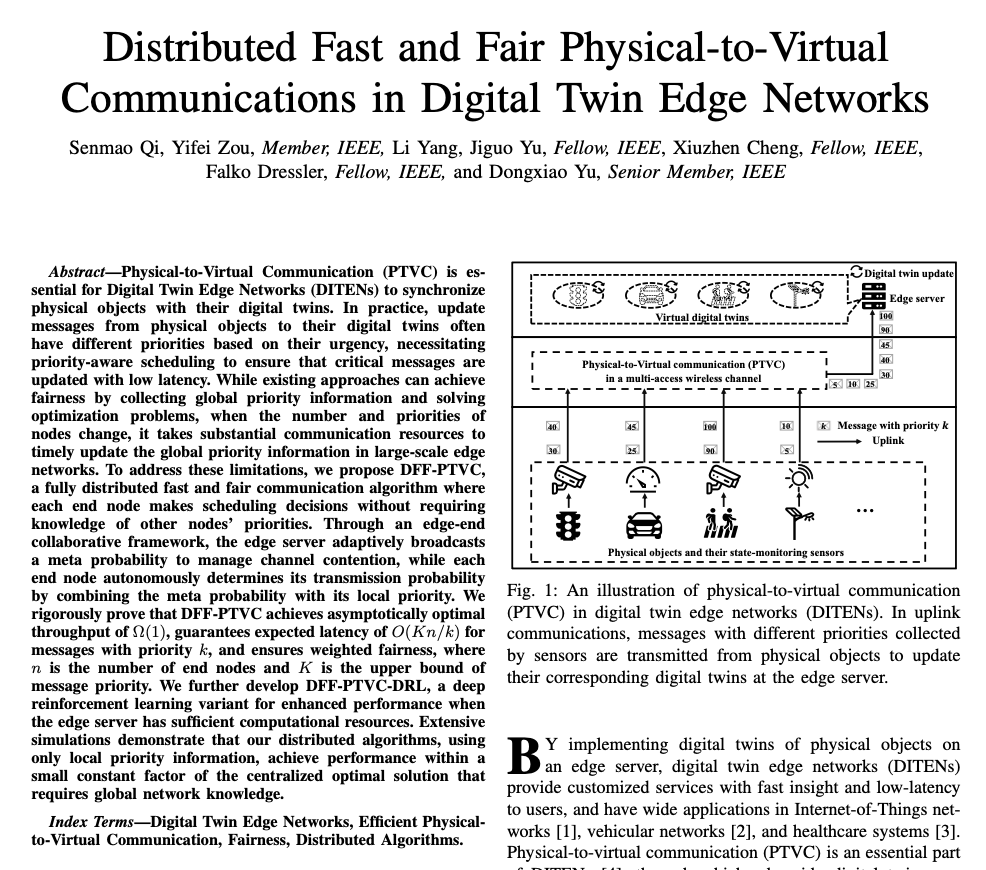
Our article Distributed Fast and Fair Physical-to-Virtual... - September 23, 2026
TKN Team at ACM NanoCom 2026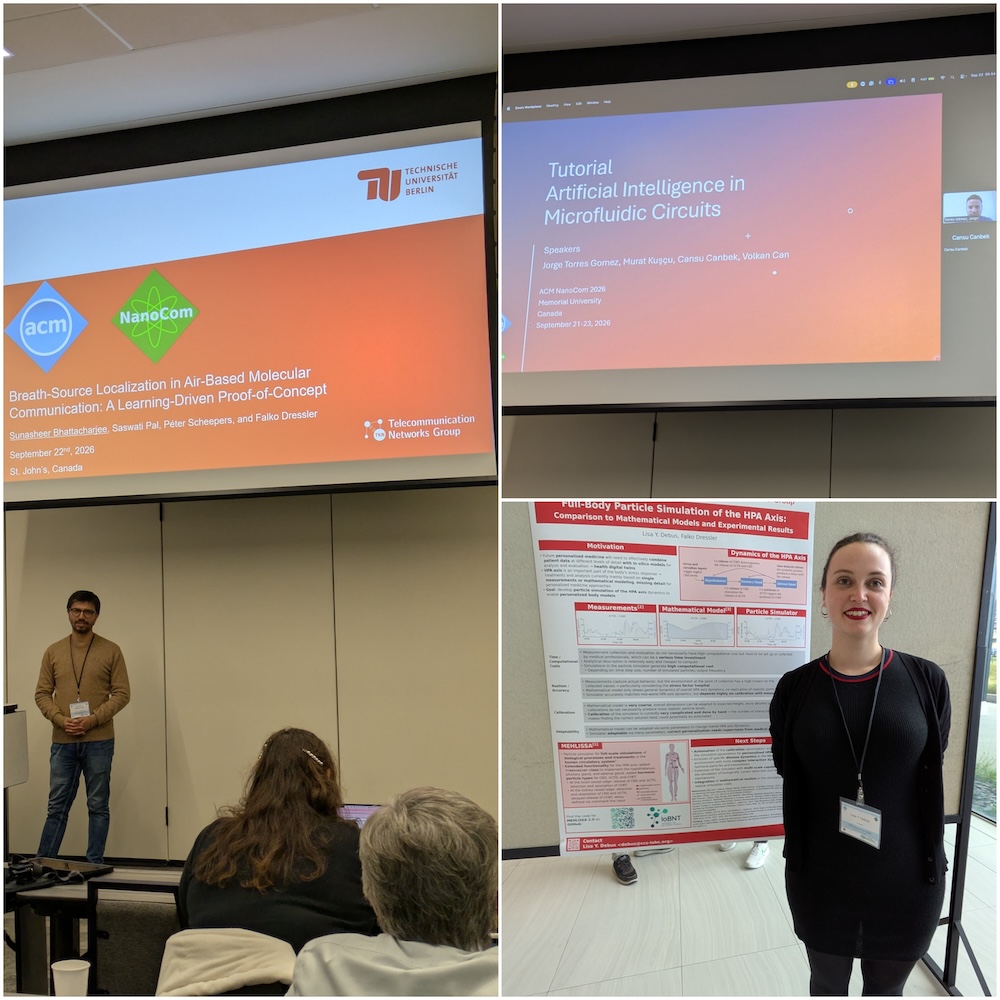
Our team presented their research at the 13th ACM Interna... - September 22, 2026
New IEEE Transactions on Networking article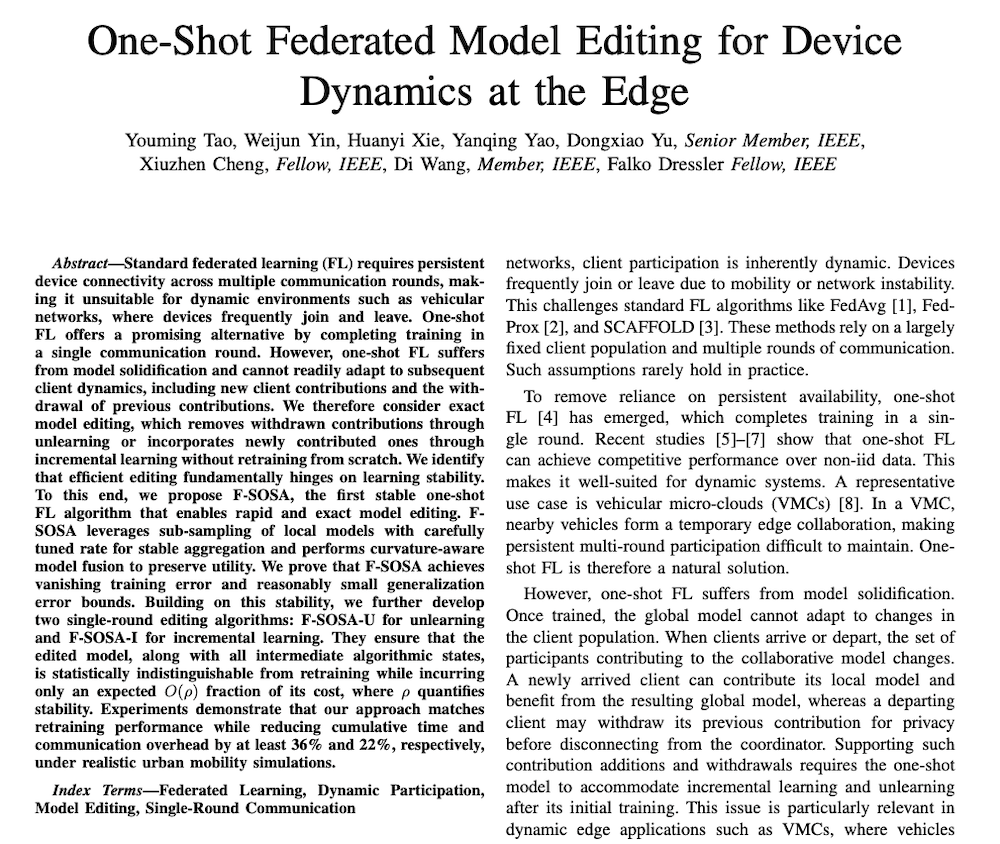
Our article One-Shot Federated Model Editing for Device D...