
Literature Database Entry
torres-gomez2026how
Jorge Torres Gómez, "How Time-Sensitive are IoBNT Networks? An Age of Information Perspective for In-Body Monitoring," Habilitation, School of Electrical Engineering and Computer Science (EECS), TU Berlin (TUB), March 2026. (Advisor: Falko Dressler; Referees: Falko Dressler, Massimiliano Pierobon and Tuna Tugcu)
Abstract
This thesis formulates a theoretical framework to evaluate the monitoring capability of internet of bio-nano-things (IoBNT) networks. The topic develops the timely detection and treatment of potential diseases for deployed IoBNT networks in the human body. We target an IoBNT network comprising nanosensors that passively flow in the bloodstream and can detect biomarkers related to potential diseases. Nanosensors can also report this detection to external gateways placed on the skin’s surface that host a monitor device. In this way, the nanosensors fetch an artificial point-to-point communication channel between the disease region in the human body and the monitor device. Similar to standard communication channels but for different reasons, some packets might get to the destination straight, while others can get lost (through vessel circuits other than the gateway). Following this network structure, we evaluate the network monitoring capability over this artificial channel using the age of information (AoI) concept. The AoI concept incorporates the joint integration of sample generation (at the disease region), carrying (nanosensor travel through the human vessels), and delivery (nanosensor-to-gateway) as random events. These three random events are represented through (i) a Markov model, which follows the physiology of the cardiovascular system, and (ii) channel models of reported nanocommunication technologies. Furthermore, we evaluate the transition probabilities for the Markov model using a cardiovascular system simulator, which consists of a low-complexity electric circuit model representing the human vessels. As for the nanosensor-to-gateway link model, we model two well-known schemes with ultrasonic and terahertz channels. Aiming to assess the monitoring capabilities of this network, we integrate these components within the AoI framework and illustrate the most relevant figures for information freshness with the average peak age of information (PAoI) metric. Under realistic physiological assumptions and communication models, we evaluate the order of magnitude in the tens of seconds to display fresh information on the monitor. In this way, this network can monitor processes at the tissue level, such as bacteria infections, and more adequate network architectures are needed to monitor on a cellular scale, where processes occur in a timescale of less than tens of seconds.
Quick access

Contact
BibTeX reference
@phdthesis{torres-gomez2026how,

     author = {Torres G{\'{o}}mez, Jorge},

     title = {{How Time-Sensitive are IoBNT Networks? An Age of Information Perspective for In-Body Monitoring}},

     advisor = {Dressler, Falko},

     institution = {School of Electrical Engineering and Computer Science (EECS)},

     location = {Berlin, Germany},

     month = {3},

     referee = {Dressler, Falko and Pierobon, Massimiliano and Tugcu, Tuna},

     school = {TU Berlin (TUB)},

     type = {Habilitation},

     year = {2026},

   }
Copyright notice
Links to final or draft versions of papers are presented here to ensure timely dissemination of scholarly and technical work. Copyright and all rights therein are retained by authors or by other copyright holders. All persons copying this information are expected to adhere to the terms and constraints invoked by each author's copyright. In most cases, these works may not be reposted or distributed for commercial purposes without the explicit permission of the copyright holder.
The following applies to all papers listed above that have IEEE copyrights: Personal use of this material is permitted. However, permission to reprint/republish this material for advertising or promotional purposes or for creating new collective works for resale or redistribution to servers or lists, or to reuse any copyrighted component of this work in other works must be obtained from the IEEE.
The following applies to all papers listed above that are in submission to IEEE conference/workshop proceedings or journals: This work has been submitted to the IEEE for possible publication. Copyright may be transferred without notice, after which this version may no longer be accessible.
The following applies to all papers listed above that have ACM copyrights: ACM COPYRIGHT NOTICE. Permission to make digital or hard copies of part or all of this work for personal or classroom use is granted without fee provided that copies are not made or distributed for profit or commercial advantage and that copies bear this notice and the full citation on the first page. Copyrights for components of this work owned by others than ACM must be honored. Abstracting with credit is permitted. To copy otherwise, to republish, to post on servers, or to redistribute to lists, requires prior specific permission and/or a fee. Request permissions from Publications Dept., ACM, Inc., fax +1 (212) 869-0481, or permissions@acm.org.
The following applies to all SpringerLink papers listed above that have Springer Science+Business Media copyrights: The original publication is available at www.springerlink.com.
This page was automatically generated using BibDB and bib2web.
Featured Paper
- One-Shot Federated Model Editing for Device Dynamics at the Edge
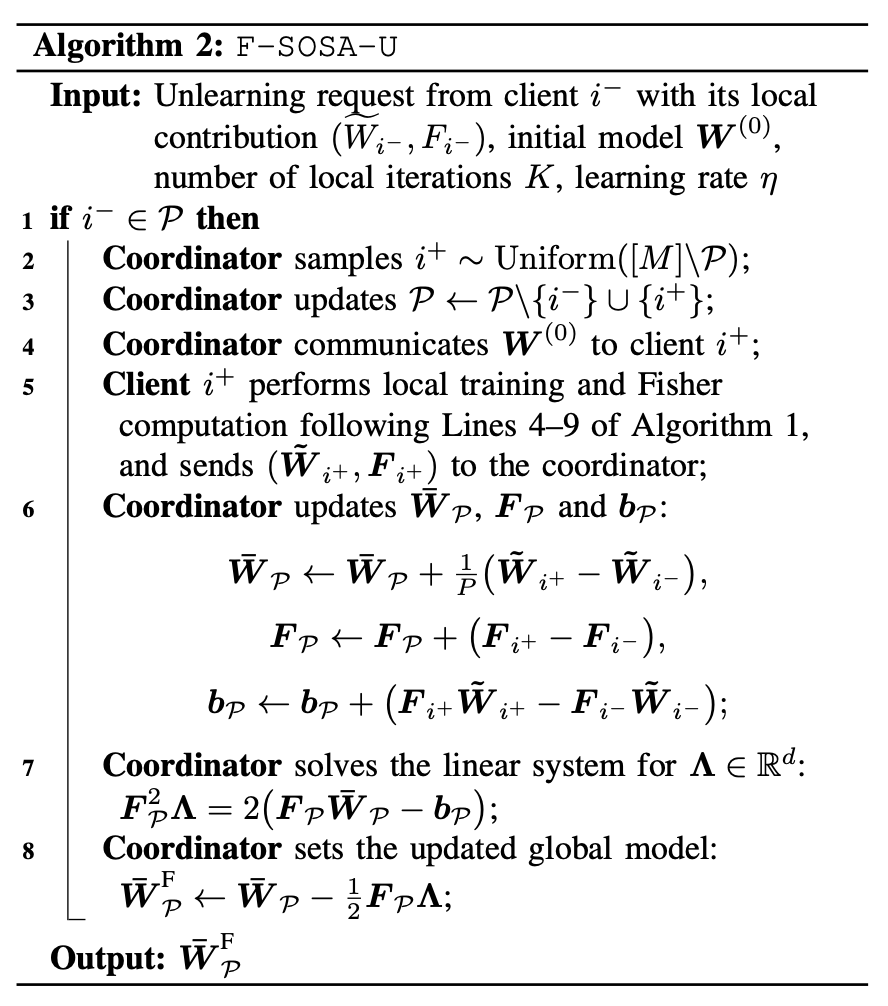
Standard federated learning (FL) requires persistent device connectivity across multiple communication rounds, making it unsuitable for dynamic environments such as ve...
News
- October 08, 2026
New IEEE Transactions on Mobile Computing article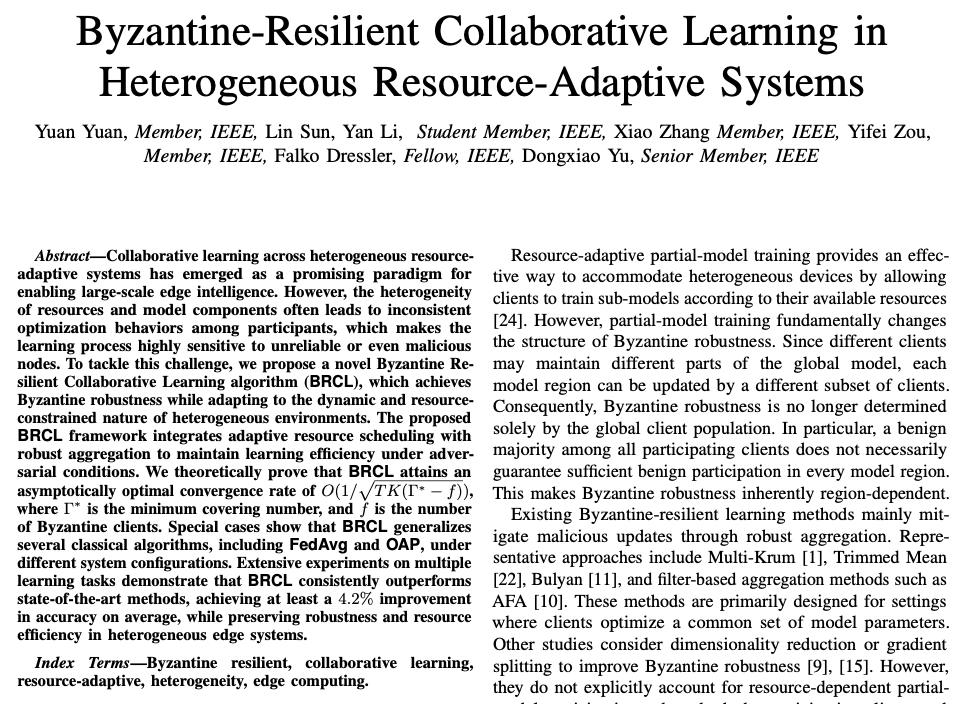
Our article Byzantine-Resilient Collaborative Learning in... - October 02, 2026
KuVS Research School on Network and System Resilience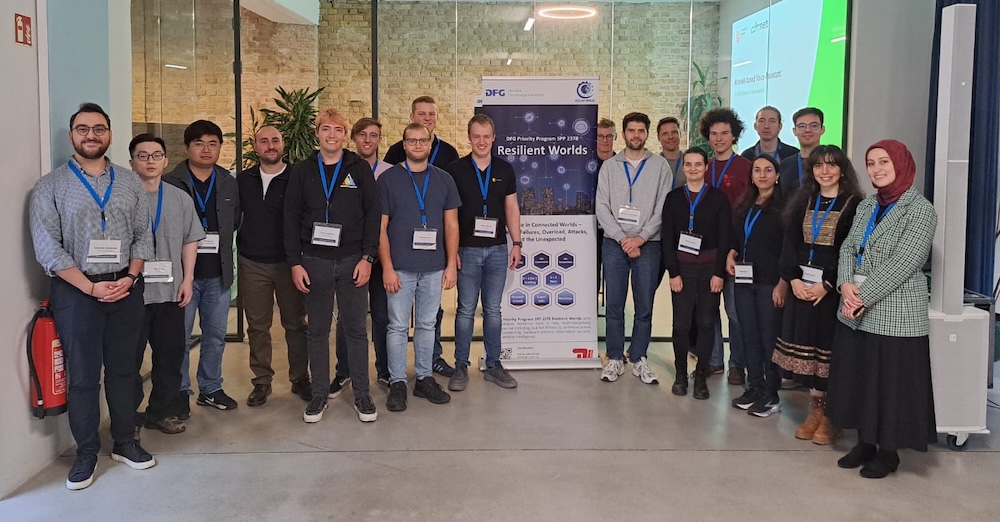
Our group member Dr. Doganalp Ergenc organized the KuVS R... - September 26, 2026
New IEEE Transactions on Mobile Computing article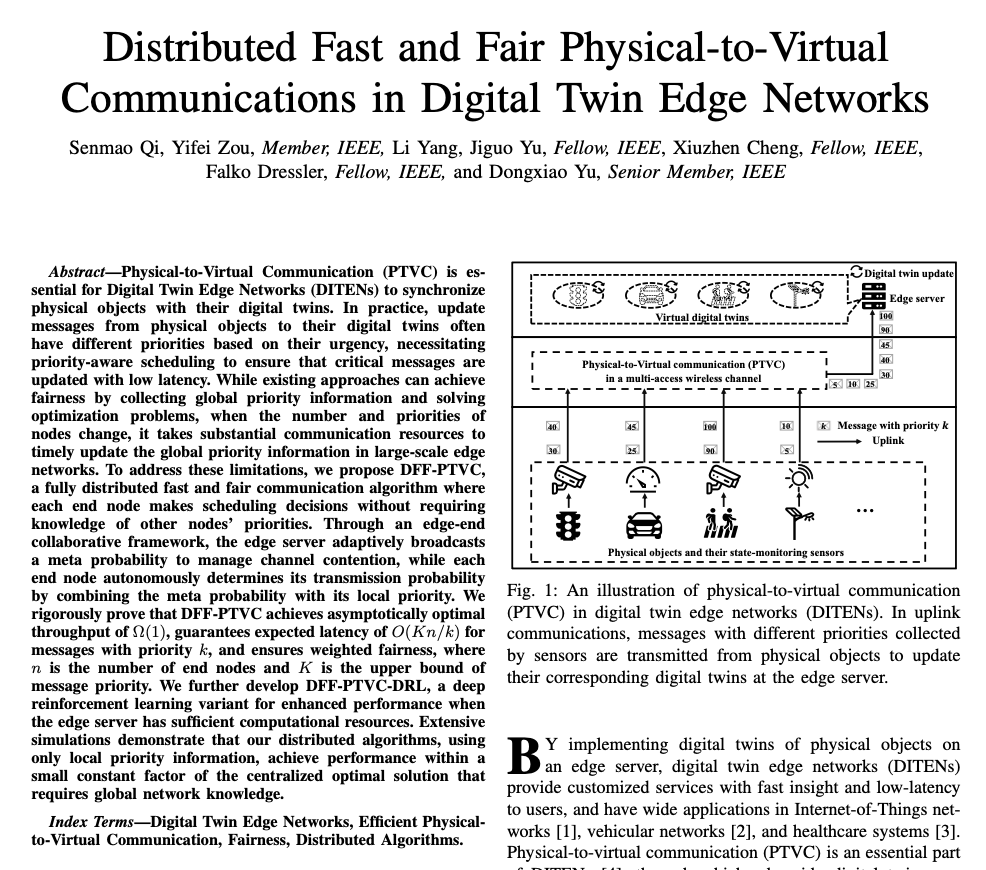
Our article Distributed Fast and Fair Physical-to-Virtual... - September 23, 2026
TKN Team at ACM NanoCom 2026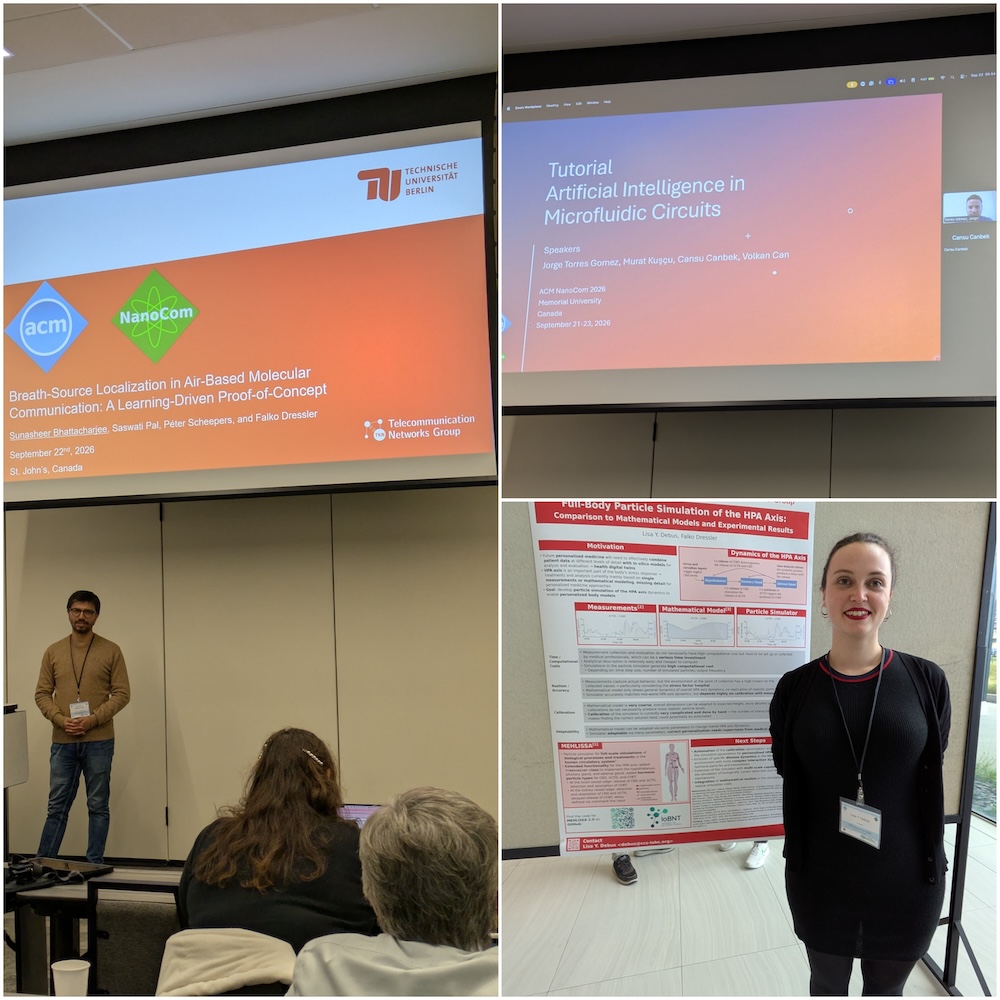
Our team presented their research at the 13th ACM Interna... - September 22, 2026
New IEEE Transactions on Networking article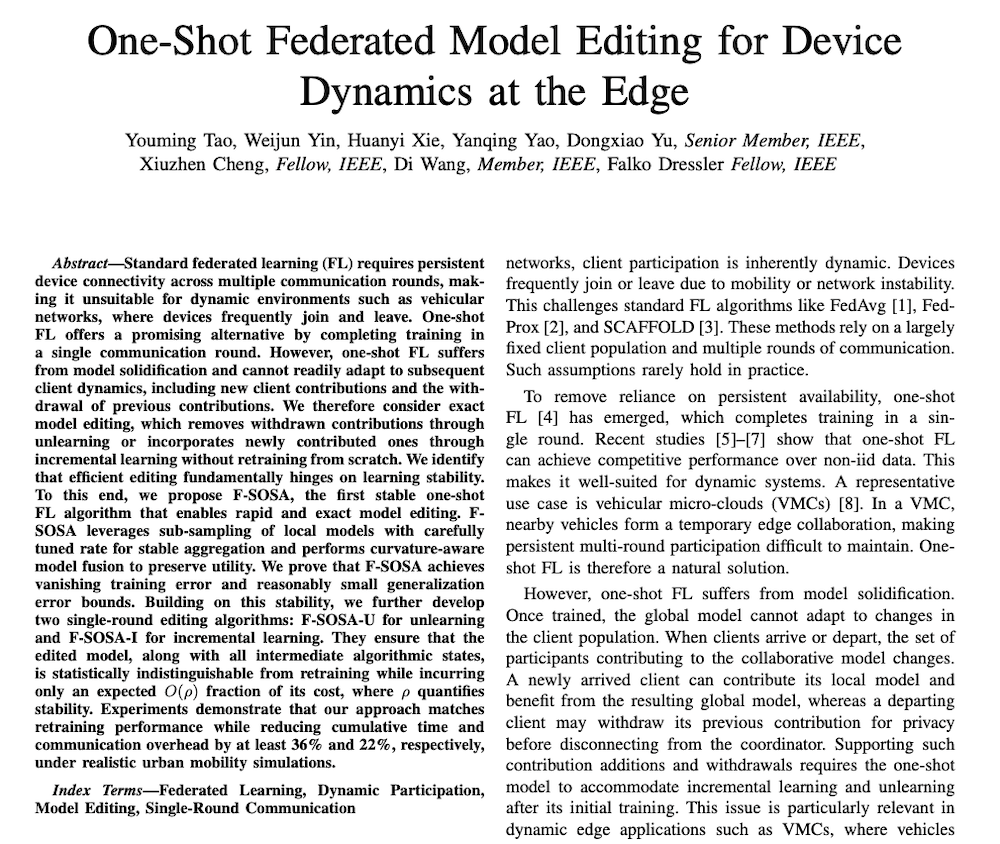
Our article One-Shot Federated Model Editing for Device D...