
Literature Database Entry
heinovski2025advancing
Julian Heinovski, "Advancing Cooperative Driving: From Information Freshness to Large-Scale and Personalized Platooning," PhD Thesis, School of Electrical Engineering and Computer Science (EECS), TU Berlin (TUB), December 2025. (Advisor: Falko Dressler; Referees: Falko Dressler, Claudio Ettore Casetti and Ana Aguiar)
Abstract
Cooperative driving applications such as intersection collision avoidance and vehicular platooning promise safer, more efficient, and more sustainable road traffic. Yet, they still face open challenges that hinder practical large-scale deployment. On one hand, cooperative driving applications depend on timely information exchange, often over a shared wireless channel with finite capacity. As freshness (age of information, AoI) requirements vary across applications and scenarios, unrestricted beaconing is not viable, raising the question of how to ensure information freshness in a resource-efficient and context-aware manner. On the other hand, while platooning has been shown to be technically feasible, it remains unclear how to form platoons of passenger cars with unknown and heterogeneous trips and preferences, while also ensuring quantifiable personal benefits to incentivize participation. This thesis addresses these challenges with three sets of contributions: First, we propose a context-aware weighting model for the AoI metric that incorporates spatial relevance into the freshness evaluation. We apply this model in an adaptive beaconing mechanism to dynamically adjust transmission rates based on perceived importance, reducing wireless resource usage while maintaining desired information freshness for relevant data. Second, we formalize vehicle-to-platoon assignments as a similarity-based optimization problem and present three solution approaches: a globally optimal numerical solver and two greedy heuristics, including a fully distributed one that relies solely on local vehicle information. This method achieves near-optimal results with minimal assumptions and complexity, offering strong scalability and robustness. Third, we develop a cost-based platoon formation algorithm that employs a new metric to quantify total trip cost by combining fuel and time expenditures into a single economic value. It forms platoons only when doing so reduces individual driver costs, outperforming both standard adaptive cruise control and similarity-based methods across diverse traffic conditions and driver preferences. To support this work, we developed PlaFoSim, an open-source simulation framework for large-scale platooning studies. Collectively, these contributions advance cooperative driving systems toward practical deployment by emphasizing context awareness, resource efficiency, decentralized decision-making, and user-centered benefits.
Quick access
Original Version  (at publishers web site)
BibTeX 
Contact
BibTeX reference
@phdthesis{heinovski2025advancing,

     author = {Heinovski, Julian},

     doi = {10.14279/depositonce-24947},

     title = {{Advancing Cooperative Driving: From Information Freshness to Large-Scale and Personalized Platooning}},

     advisor = {Dressler, Falko},

     institution = {School of Electrical Engineering and Computer Science (EECS)},

     location = {Berlin, Germany},

     month = {12},

     referee = {Dressler, Falko and Casetti, Claudio Ettore and Aguiar, Ana},

     school = {TU Berlin (TUB)},

     type = {PhD Thesis},

     year = {2025},

   }
Copyright notice
Links to final or draft versions of papers are presented here to ensure timely dissemination of scholarly and technical work. Copyright and all rights therein are retained by authors or by other copyright holders. All persons copying this information are expected to adhere to the terms and constraints invoked by each author's copyright. In most cases, these works may not be reposted or distributed for commercial purposes without the explicit permission of the copyright holder.
The following applies to all papers listed above that have IEEE copyrights: Personal use of this material is permitted. However, permission to reprint/republish this material for advertising or promotional purposes or for creating new collective works for resale or redistribution to servers or lists, or to reuse any copyrighted component of this work in other works must be obtained from the IEEE.
The following applies to all papers listed above that are in submission to IEEE conference/workshop proceedings or journals: This work has been submitted to the IEEE for possible publication. Copyright may be transferred without notice, after which this version may no longer be accessible.
The following applies to all papers listed above that have ACM copyrights: ACM COPYRIGHT NOTICE. Permission to make digital or hard copies of part or all of this work for personal or classroom use is granted without fee provided that copies are not made or distributed for profit or commercial advantage and that copies bear this notice and the full citation on the first page. Copyrights for components of this work owned by others than ACM must be honored. Abstracting with credit is permitted. To copy otherwise, to republish, to post on servers, or to redistribute to lists, requires prior specific permission and/or a fee. Request permissions from Publications Dept., ACM, Inc., fax +1 (212) 869-0481, or permissions@acm.org.
The following applies to all SpringerLink papers listed above that have Springer Science+Business Media copyrights: The original publication is available at www.springerlink.com.
This page was automatically generated using BibDB and bib2web.
Featured Paper
- One-Shot Federated Model Editing for Device Dynamics at the Edge
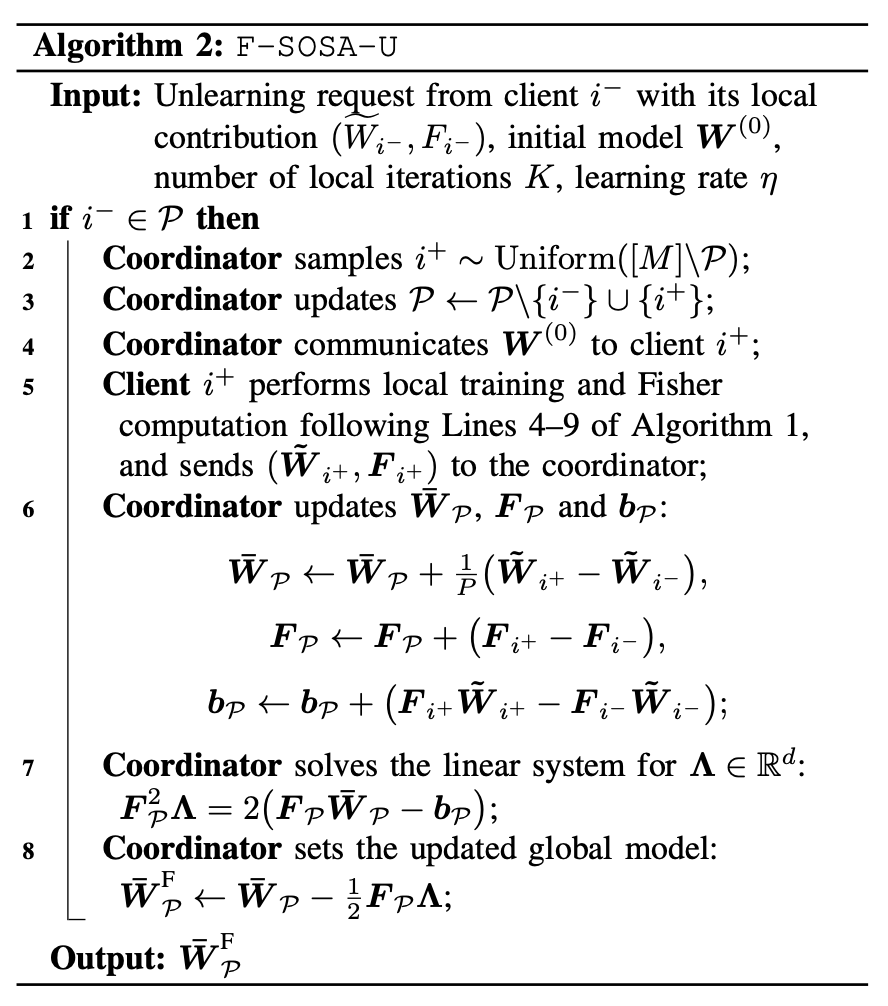
Standard federated learning (FL) requires persistent device connectivity across multiple communication rounds, making it unsuitable for dynamic environments such as ve...
News
- October 08, 2026
New IEEE Transactions on Mobile Computing article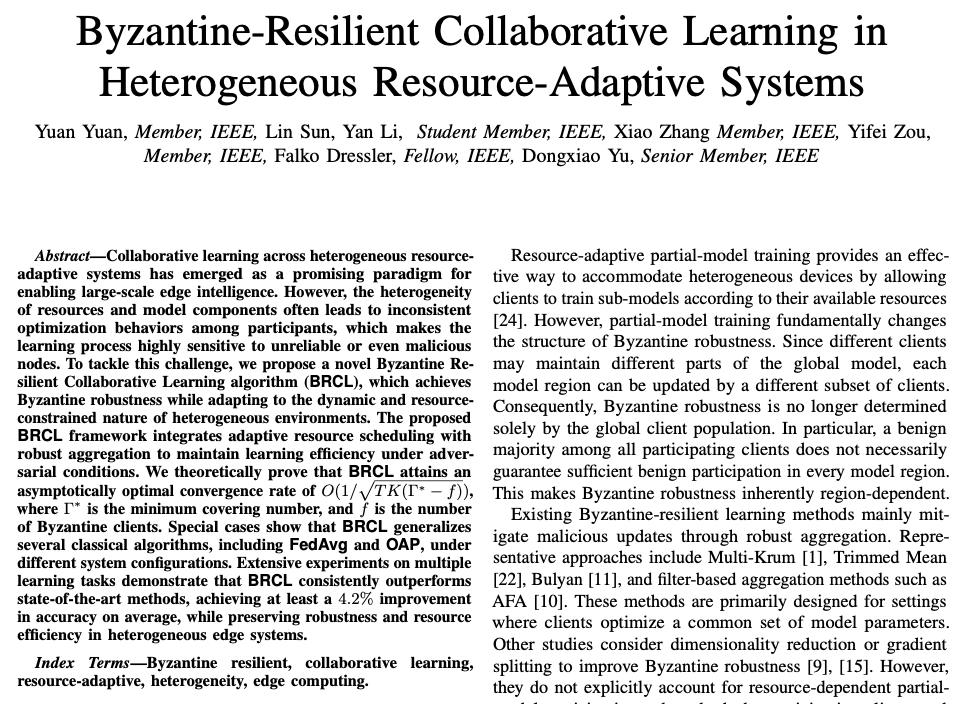
Our article Byzantine-Resilient Collaborative Learning in... - October 02, 2026
KuVS Research School on Network and System Resilience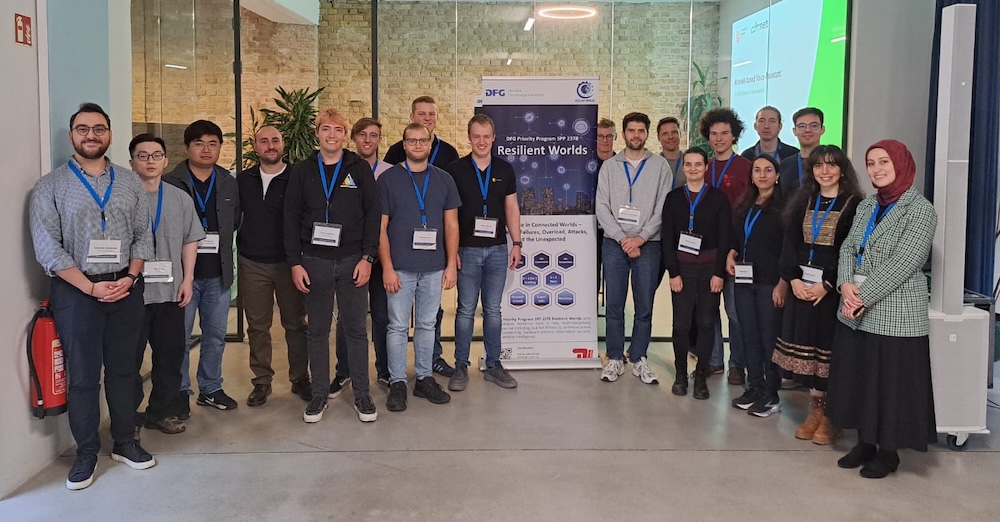
Our group member Dr. Doganalp Ergenc organized the KuVS R... - September 26, 2026
New IEEE Transactions on Mobile Computing article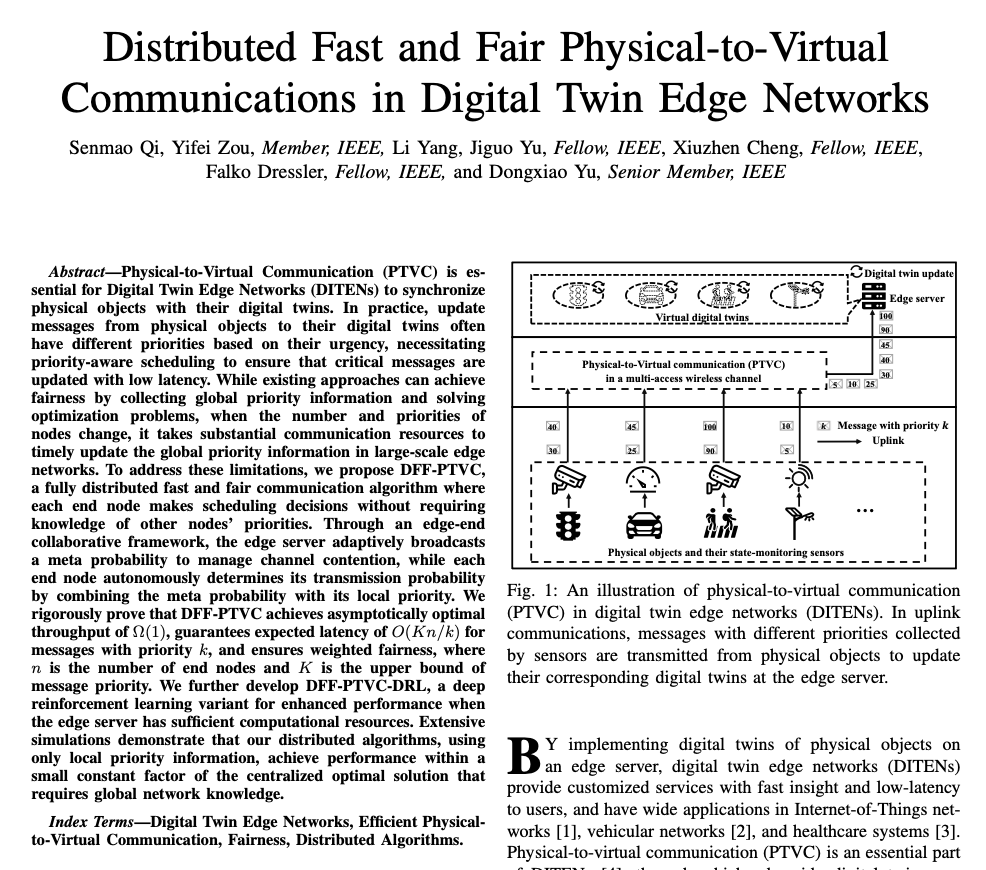
Our article Distributed Fast and Fair Physical-to-Virtual... - September 23, 2026
TKN Team at ACM NanoCom 2026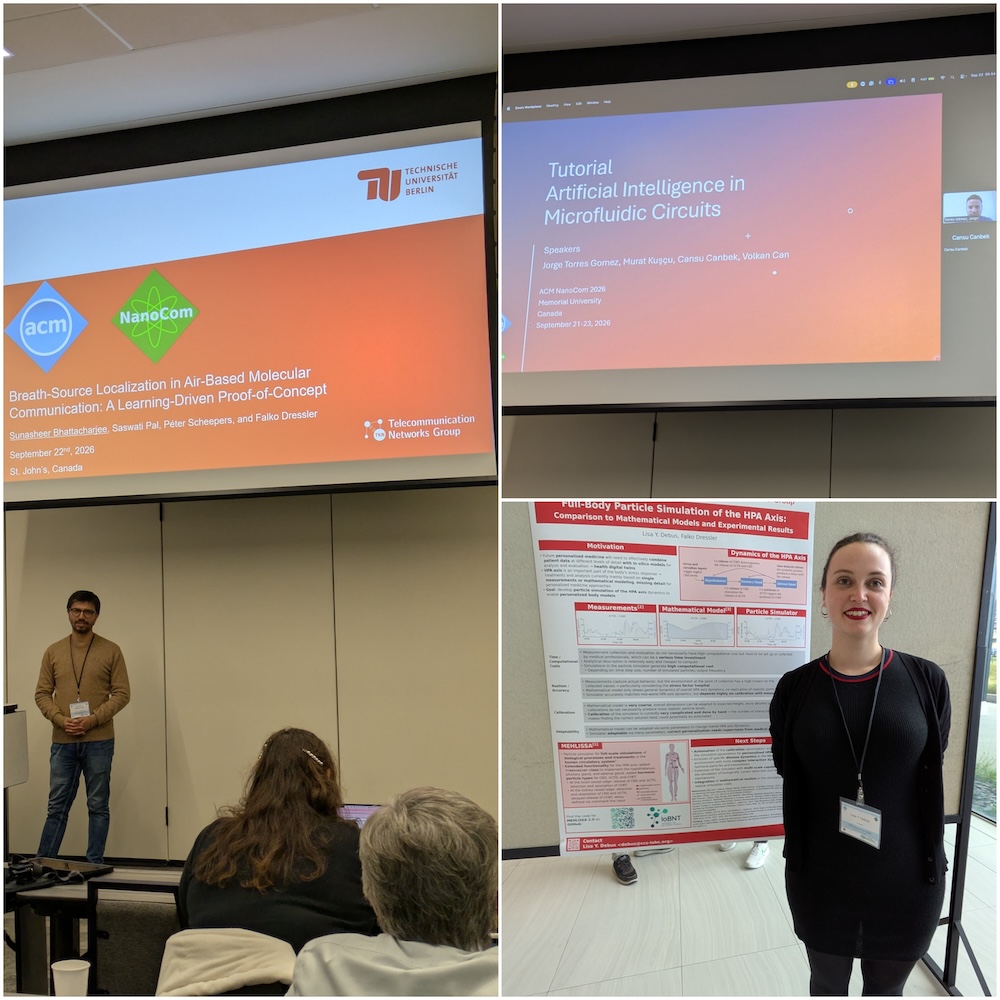
Our team presented their research at the 13th ACM Interna... - September 22, 2026
New IEEE Transactions on Networking article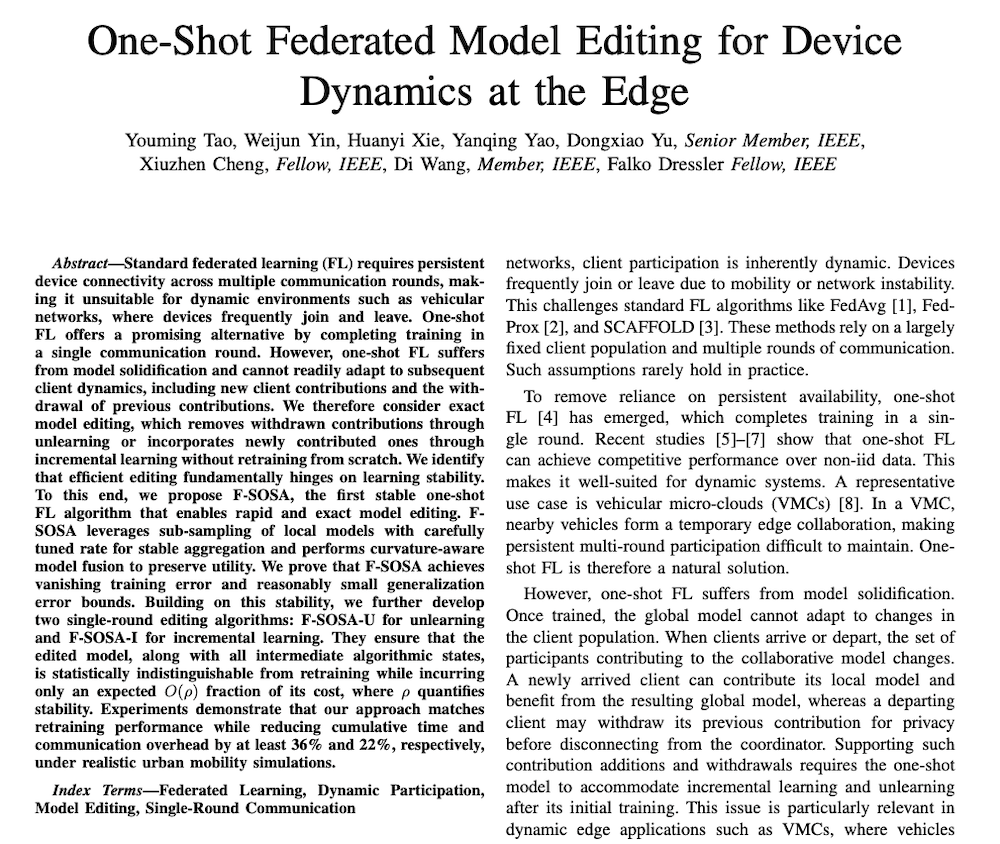
Our article One-Shot Federated Model Editing for Device D...