
Literature Database Entry
dogim2026joint
Ghadir Dogim, Ahmed El-Mahdy and Falko Dressler, "Joint RIS-RSMA Optimization for Asynchronous Multi-user Cell-Free MIMO," IEEE Open Journal of the Communications Society, vol. 7, pp. 11366–11390, September 2026.
Abstract
Cell-free multiple-input multiple-output (CF-MIMO) systems assisted by reconfigurable intelligent surfaces (RISs) and rate-splitting multiple access (RSMA) are promising for interference management in distributed sixth-generation (6G) networks. In practical CF-MIMO deployments, independent access-point (AP) oscillators and unequal propagation delays introduce AP-dependent phase variations that reduce coherent combining and degrade precoding performance. This paper develops a unified RIS-RSMA optimization framework for asynchronous downlink CF-MIMO. The RSMA common precoder, private precoders, and passive RIS phase shifts are jointly optimized within a sum-rate maximization problem subject to total transmit-power, per-user quality-of-service, and RIS unit-modulus constraints. The resulting non-convex problem is addressed through a weighted minimum mean-square error (WMMSE)-based alternating optimization framework with Gauss–Seidel coordinate optimization for the RIS phase subproblem. An analytical common-stream power expression is derived to explain the limited benefit of decoupled common-precoder designs. The analysis shows that independent oscillator phase drifts at the APs attenuate coherent cross-AP combining terms and can restrict the common rate through the weakest-user decoding constraint. In the default overloaded CF-MIMO configuration, the tested heuristic common-precoder schemes provide less than 0.2% gain over the corresponding optimized space-division multiple access (SDMA) baseline when combined with WMMSE-optimized private precoders. In contrast, the proposed joint RSMA design achieves approximately 12–15% sum-rate gain at moderate-to-high transmit powers and retains a similar high-power advantage in a larger-scale validation. Targeted comparisons using WMMSE and regularized zero-forcing (RZF) private precoders, together with the common-power allocation results, support the need for joint common/private precoder design. Additional results show that the gain persists across the tested RIS sizes, oscillator phase-noise variances, Rician factors, loading ratios, channel realizations, and multi-RIS deployments. Distributed multi-RIS deployment also improves spatial coverage uniformity under a fixed total element budget.
Quick access
Original Version  (at publishers web site)
Authors' Version  (PDF on this web site)
BibTeX 
Contact
Ghadir Dogim
Ahmed El-Mahdy
Falko Dressler
BibTeX reference
@article{dogim2026joint,

     author = {Dogim, Ghadir and El-Mahdy, Ahmed and Dressler, Falko},

     doi = {10.1109/OJCOMS.2026.3730513},

     title = {{Joint RIS-RSMA Optimization for Asynchronous Multi-user Cell-Free MIMO}},

     pages = {11366--11390},

     journal = {IEEE Open Journal of the Communications Society},

     issn = {2644-125X},

     publisher = {IEEE},

     month = {9},

     volume = {7},

     year = {2026},

   }
Copyright notice
Links to final or draft versions of papers are presented here to ensure timely dissemination of scholarly and technical work. Copyright and all rights therein are retained by authors or by other copyright holders. All persons copying this information are expected to adhere to the terms and constraints invoked by each author's copyright. In most cases, these works may not be reposted or distributed for commercial purposes without the explicit permission of the copyright holder.
The following applies to all papers listed above that have IEEE copyrights: Personal use of this material is permitted. However, permission to reprint/republish this material for advertising or promotional purposes or for creating new collective works for resale or redistribution to servers or lists, or to reuse any copyrighted component of this work in other works must be obtained from the IEEE.
The following applies to all papers listed above that are in submission to IEEE conference/workshop proceedings or journals: This work has been submitted to the IEEE for possible publication. Copyright may be transferred without notice, after which this version may no longer be accessible.
The following applies to all papers listed above that have ACM copyrights: ACM COPYRIGHT NOTICE. Permission to make digital or hard copies of part or all of this work for personal or classroom use is granted without fee provided that copies are not made or distributed for profit or commercial advantage and that copies bear this notice and the full citation on the first page. Copyrights for components of this work owned by others than ACM must be honored. Abstracting with credit is permitted. To copy otherwise, to republish, to post on servers, or to redistribute to lists, requires prior specific permission and/or a fee. Request permissions from Publications Dept., ACM, Inc., fax +1 (212) 869-0481, or permissions@acm.org.
The following applies to all SpringerLink papers listed above that have Springer Science+Business Media copyrights: The original publication is available at www.springerlink.com.
This page was automatically generated using BibDB and bib2web.
Featured Paper
- One-Shot Federated Model Editing for Device Dynamics at the Edge
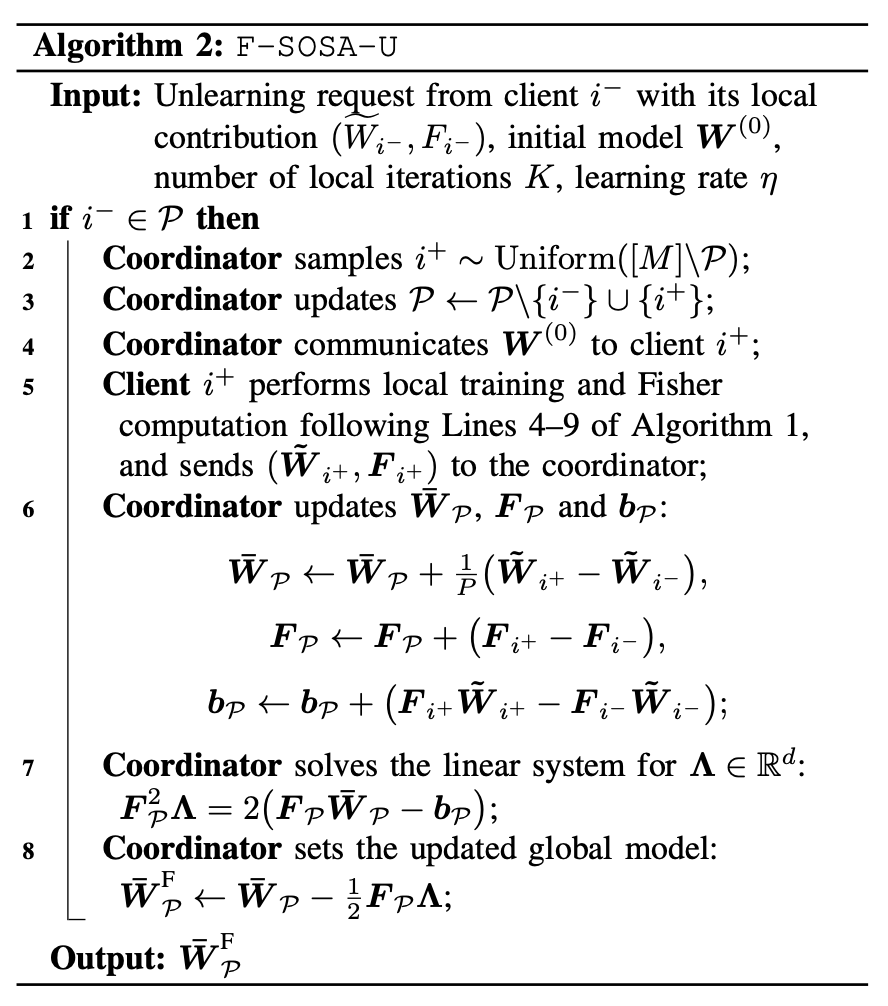
Standard federated learning (FL) requires persistent device connectivity across multiple communication rounds, making it unsuitable for dynamic environments such as ve...
News
- October 08, 2026
New IEEE Transactions on Mobile Computing article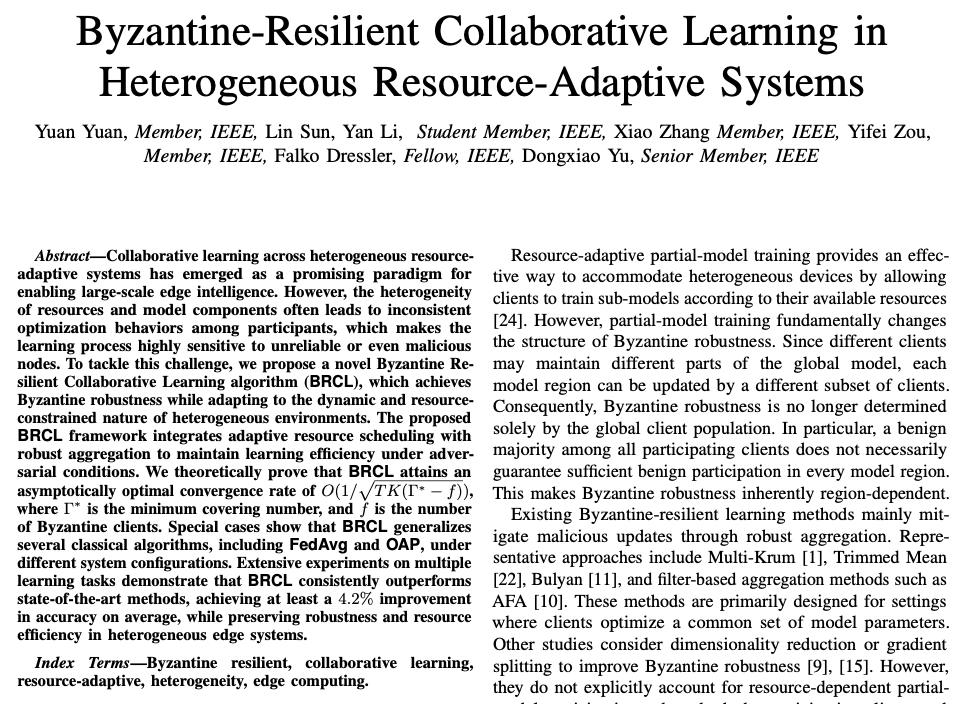
Our article Byzantine-Resilient Collaborative Learning in... - October 02, 2026
KuVS Research School on Network and System Resilience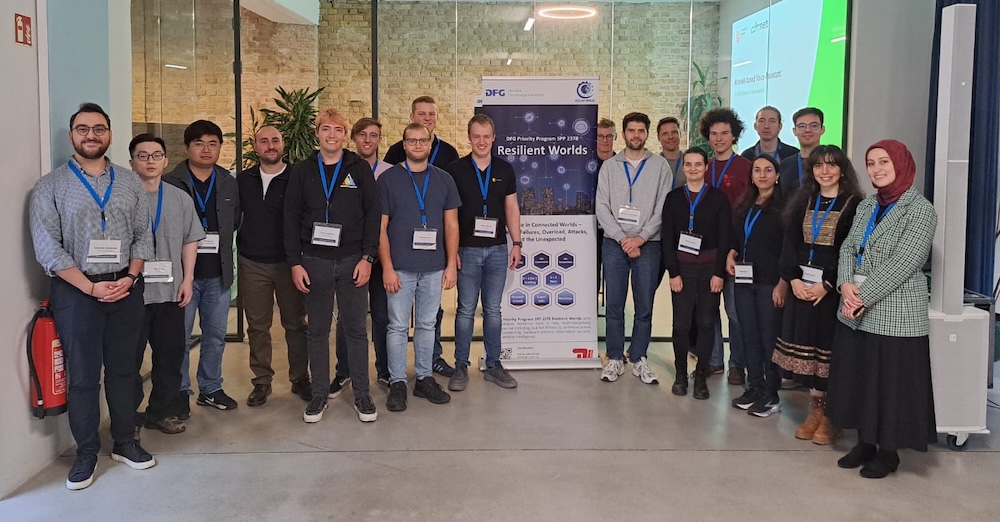
Our group member Dr. Doganalp Ergenc organized the KuVS R... - September 26, 2026
New IEEE Transactions on Mobile Computing article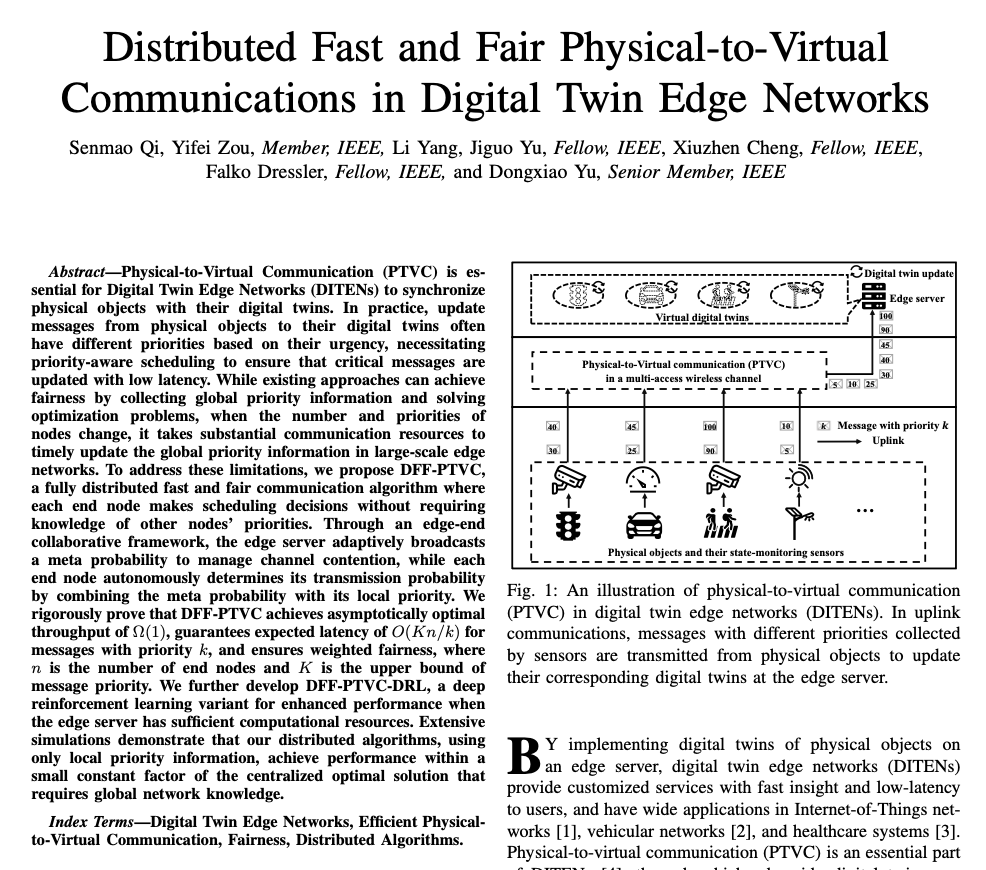
Our article Distributed Fast and Fair Physical-to-Virtual... - September 23, 2026
TKN Team at ACM NanoCom 2026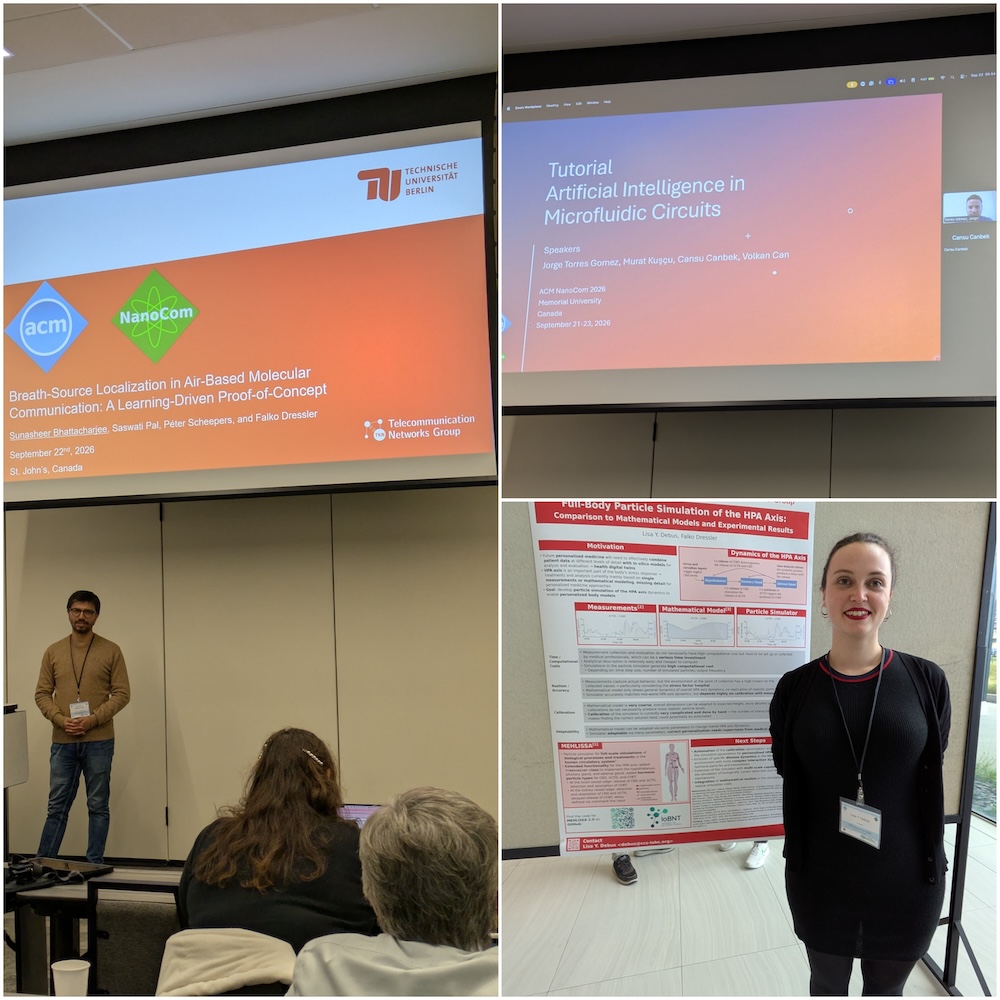
Our team presented their research at the 13th ACM Interna... - September 22, 2026
New IEEE Transactions on Networking article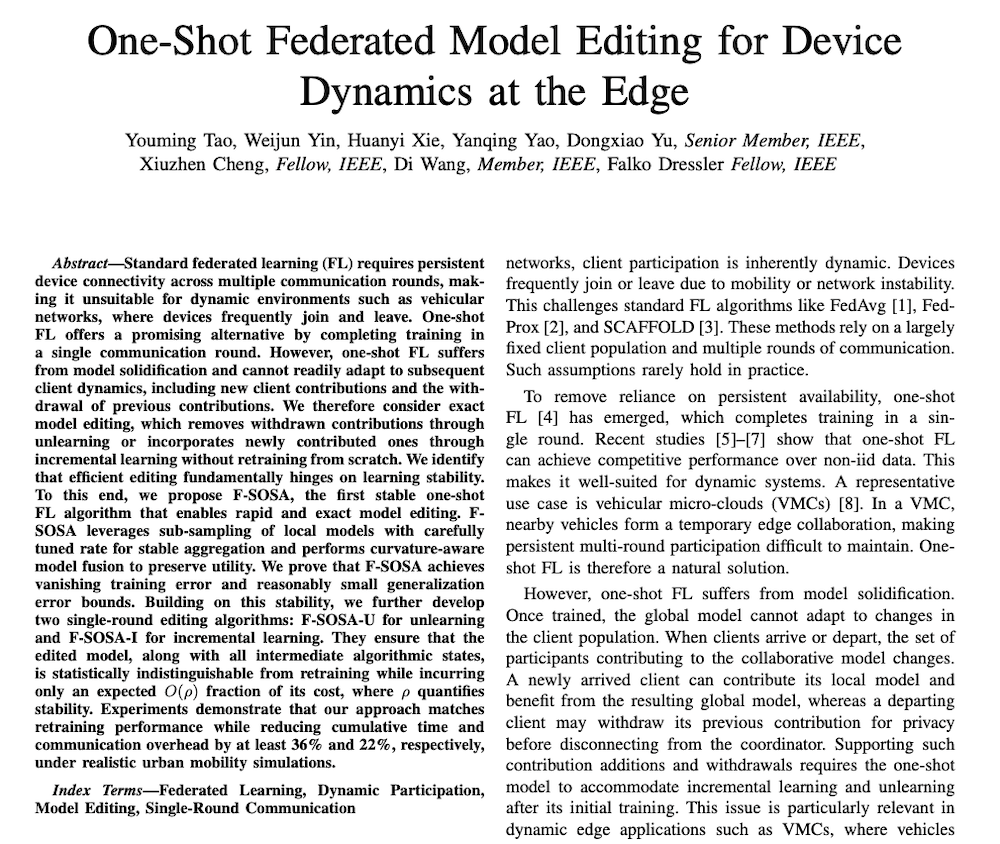
Our article One-Shot Federated Model Editing for Device D...